“A life of love and service to others, even at the cost of personal sacrifice.”
Anton Srholec
Salesian, political prisoner, priest and humanist. He devoted his whole life to serving those whom society forgets — prisoners, the homeless, people on the margins.
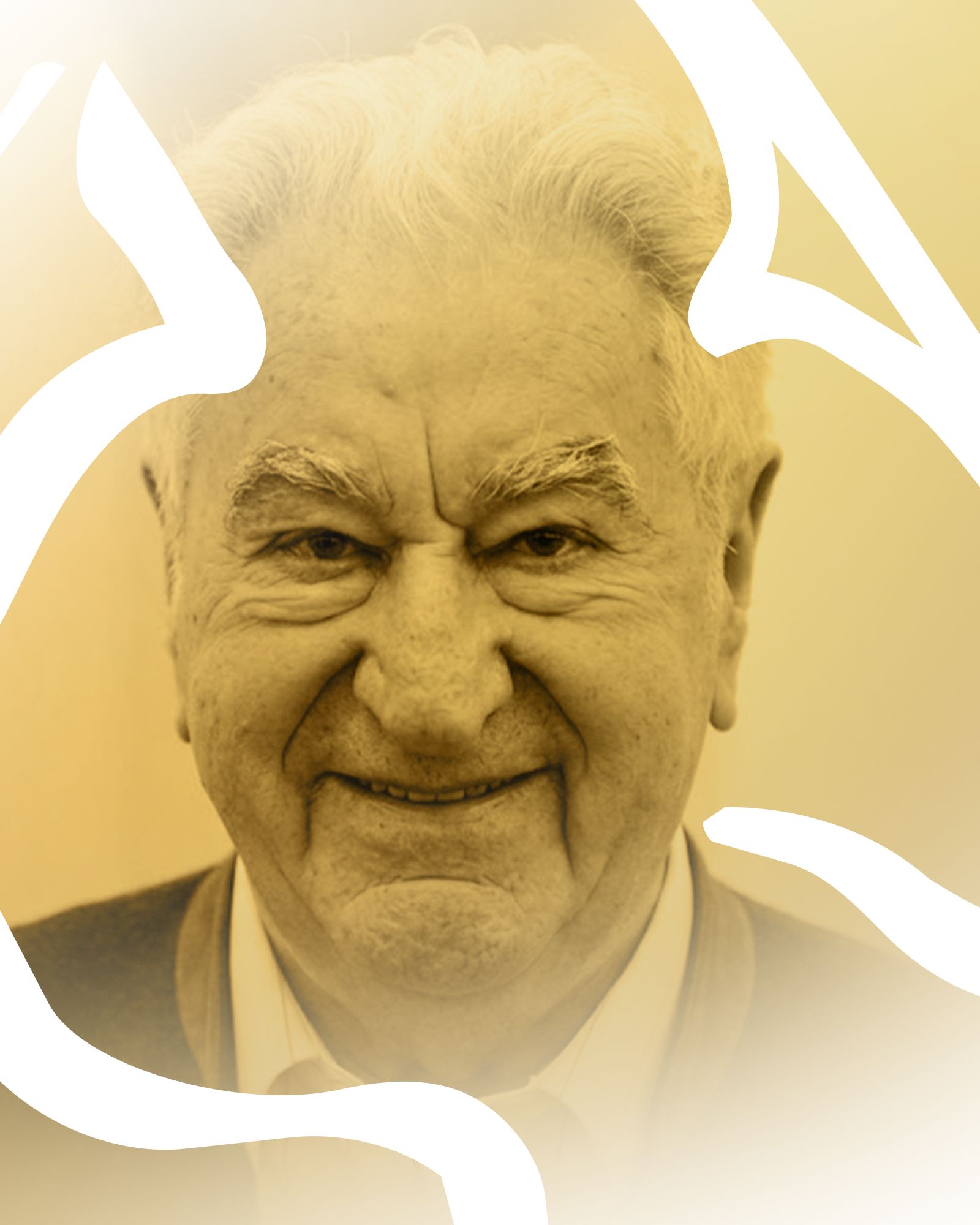
- 1929
Childhood and vocation
Anton Srholec was born on 12 June 1929 in Skalica, one of seven children. He grew up in an environment of deep faith and strong family ties. At the age of seventeen he joined the Salesian religious congregation, intending to devote himself to the education of poor young people. In 1950 the communist regime dissolved all religious orders and congregations, preventing Anton Srholec from completing his theological studies.
- 1951
Prison and the uranium mines
In 1951 he attempted to escape across the border so that he could fulfil his dream of becoming a priest abroad. He was caught, sentenced to twelve years in prison and spent ten years as a forced labourer. He served most of his sentence in the uranium mines of Jáchymov — in conditions that many prisoners did not survive.
Despite the physical harshness of this period, Srholec preserved his humanity and his inner freedom. It was in prison that his vocation to the priesthood and to service deepened.
- 1960
After his release: studies and ordination
After his release from prison, he worked for ten years as a labourer on construction sites, in factories and at the blast furnaces of the Ostrava steelworks. The communist authorities did not allow him to work publicly. In 1969 he was granted permission to travel to Italy, where he completed his studies at the Pontifical Salesian University in Turin and was ordained a priest.
At a time when thousands of people were emigrating from the communist regime, Anton Srholec gave up his freedom and returned to the totalitarian state, convinced that he could be of greater use there. After his return, he was active in pastoral ministry and youth work at the Blumentál church in Bratislava, which during his time there became an oasis in a Bratislava undergoing “normalisation”. He became a priest to whom people came not only for the sacraments, but also for his open mind and plain speaking.
- 1985
Samizdat and a second ban
Srholec was actively involved in publishing samizdat religious literature and in maintaining unofficial contacts with dissidents. His activities were under constant surveillance by State Security (StB). In 1985 the state withdrew his licence to exercise any pastoral ministry at all. He had to return to manual labour.
Even this did not break him. He continued to meet people, helped wherever he could and waited patiently for change.
- 1989
After November: working for the most vulnerable
After the fall of communism, Anton Srholec devoted himself fully to public and humanitarian work. He cooperated with the Slovak Helsinki Committee for Minority Rights and the Slovak section of the Society for Science and Arts, was a member of the board of the Konto nádeje (Account of Hope) foundation, and was active in the Confederation of Political Prisoners and in other civic and social organisations.
Anton Srholec also devoted himself to helping people in concrete ways. His heart belonged to those who were lost on the margins of society. He fought tirelessly for their rights and dignity. He founded a home for the homeless in Bratislava, which helped the most vulnerable members of society. He set up a non-profit organisation that offered them shelter and a chance to get back on their feet.
He turned his convictions into an institution: his non-profit organisation served as a concrete response to social need. Srholec believed that faith without deeds is empty.
Alongside his social work, he was also active as a writer and commentator. He contributed to various periodicals and gave lectures and advice on social projects, particularly those concerning homeless people.
- 2016
Legacy
Anton Srholec died on 7 January 2016 in Bratislava at the age of 86. He left behind an example that transcends his time: proof that freedom is not merely the absence of oppression, but an active choice of love and service — even at the cost of personal sacrifice.
The life of Anton Srholec is a story of courage, faith and unbreakable will. Through his life both before and after 1989, he became a symbol of faith in humanity and of the struggle for religious freedom, human dignity and human rights. Anton Srholec is a symbol of what it means to be a hero of heart and spirit.
Each year, the Freedom Award that bears his name seeks to remind us that such lives exist — and that they deserve to be seen.
Honours
- Honorary doctorate (Dr. h. c.) for his work in the social sphere, University of Trnava, 1999
- Honorary citizenship of the town of Skalica, 1999
- Cardinal König Prize for work for faith and freedom, Austrian Bishops’ Conference, 1999
- Laureate of the Gift of the Year award (Dar roka), Slovak Humanitarian Council, 1995, 1999, 2002, 2003; main laureate, 2001
- State decoration: Order of Ľudovít Štúr, 2nd class, 2003
- Cyril and Methodius Medal, Centre of the Slovak Christian Intelligentsia, 2004
- Philanthropist of the Year, Donors Forum, 2012
- Memory of Nations Award (Cena Paměti národa) at the National Theatre in Prague, Post Bellum, 2014
- Crystal Wing (Krištáľové krídlo) – special award for lifetime achievement, 2015
- Leopold Kunschak Prize for his work in the social field and his human rights activities during the communist regime, Vienna, 2015
- White Crow award (Biela vrana), 2015
Works
- Každodenné zamyslenia [Everyday Reflections]. Prešov: Vydavateľstvo Michala Vaška, 1995
- Svetlo z hlbín jáchymovských lágrov [Light from the Depths of the Jáchymov Camps]. Prešov: Vydavateľstvo Michala Vaška, 1996
- Ako čerstvý chlieb [Like Fresh Bread]. Prešov: Vydavateľstvo Michala Vaška, 2009
- Sviatočné pozdravy [Festive Greetings]. Bratislava: Slovart, 2014