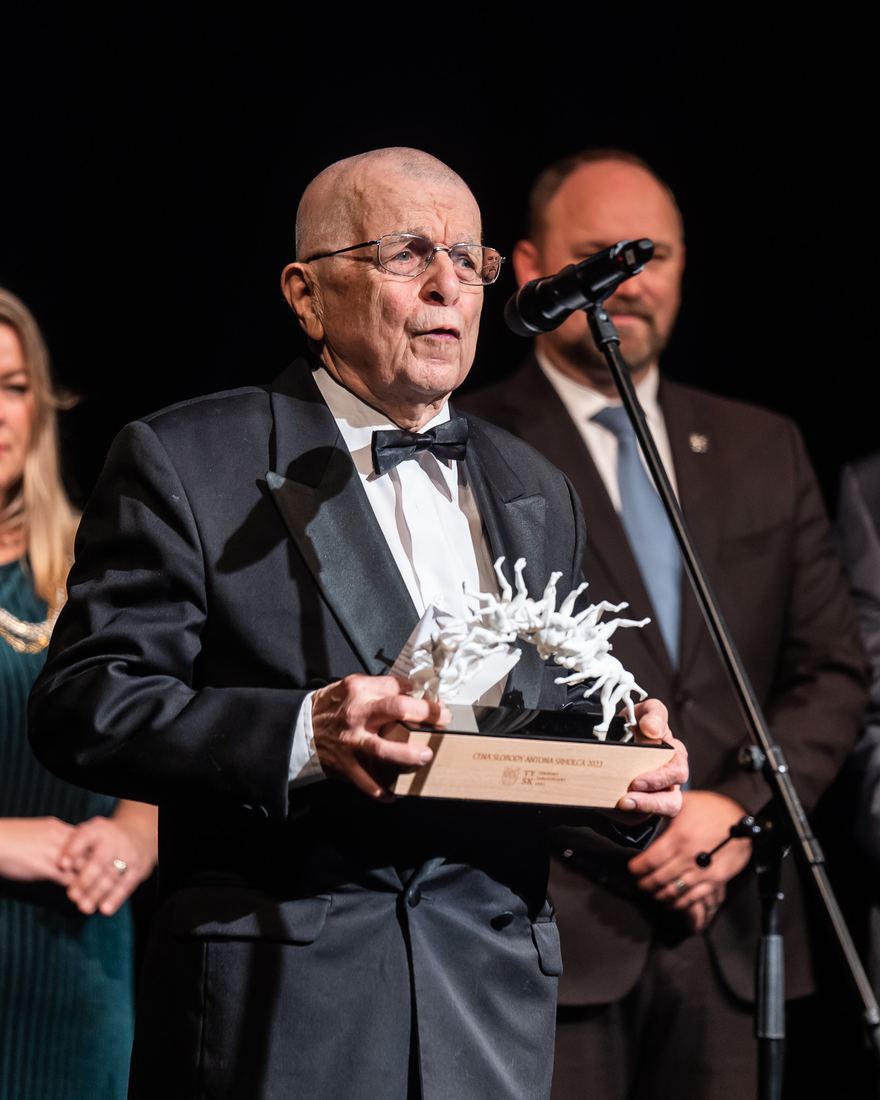
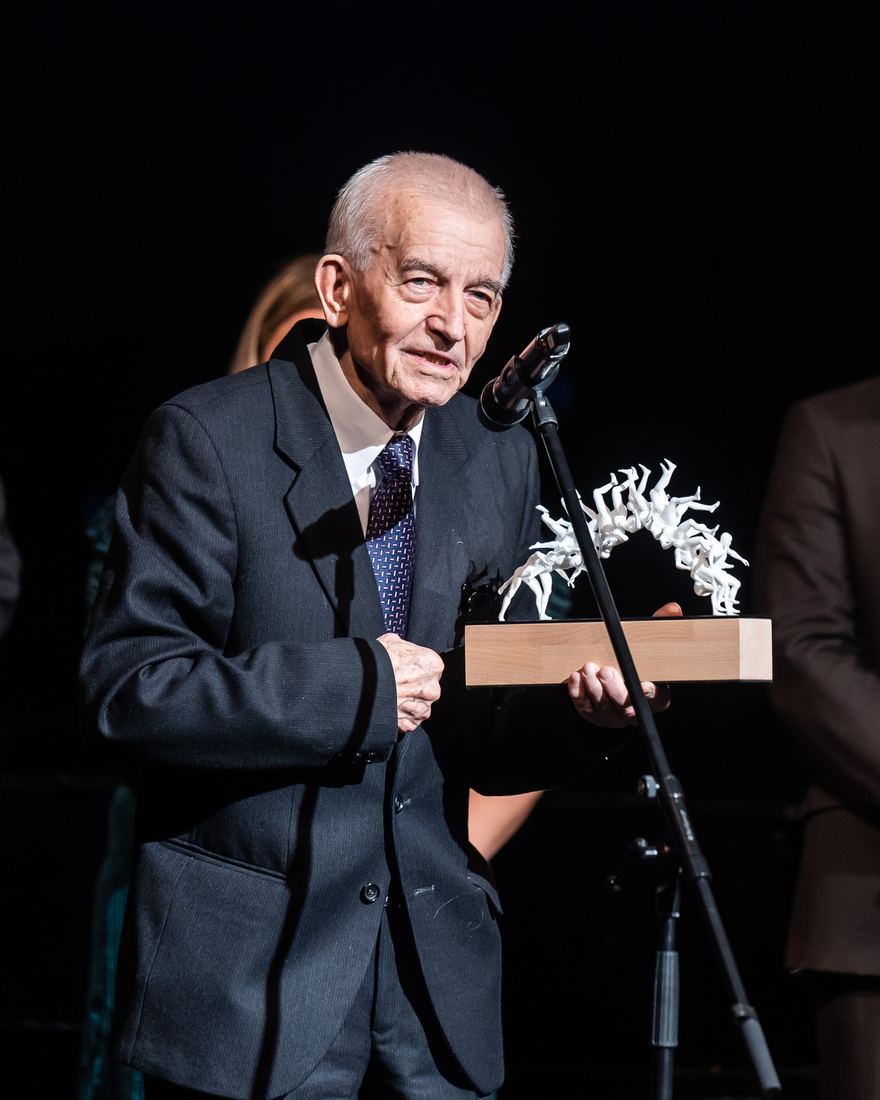
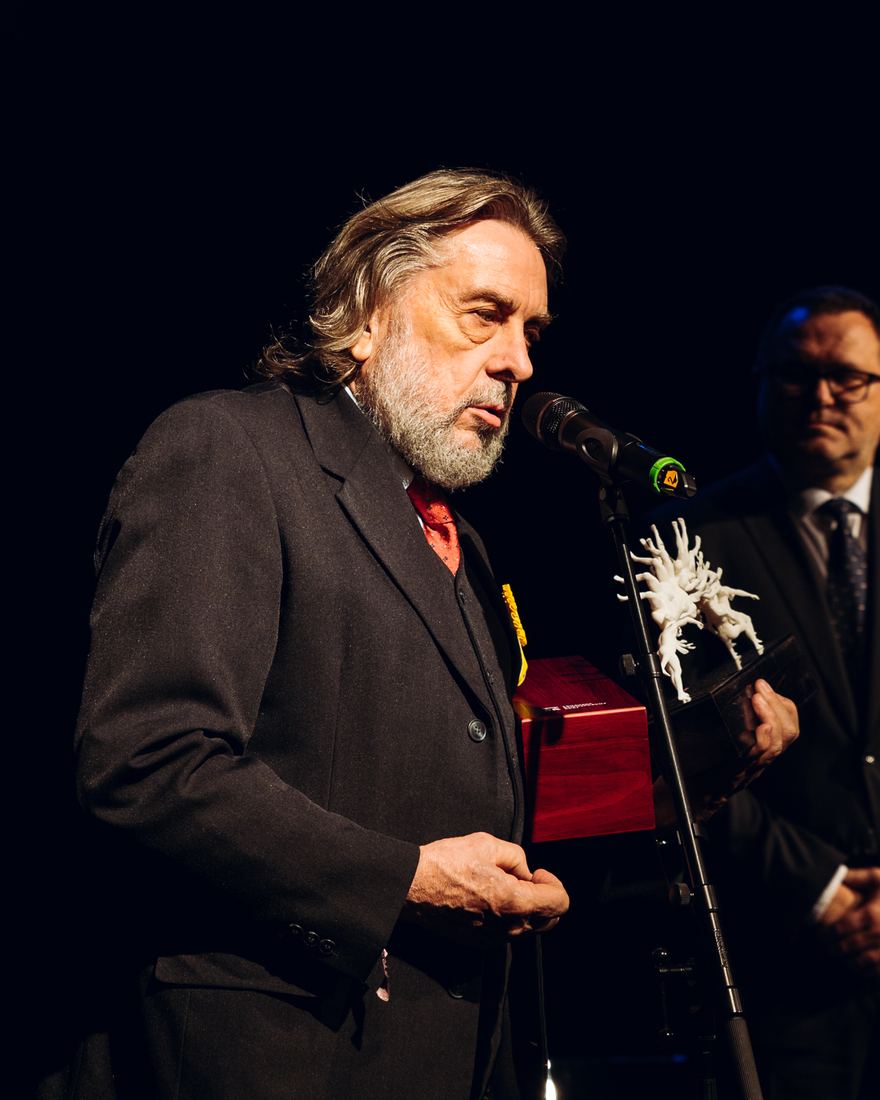
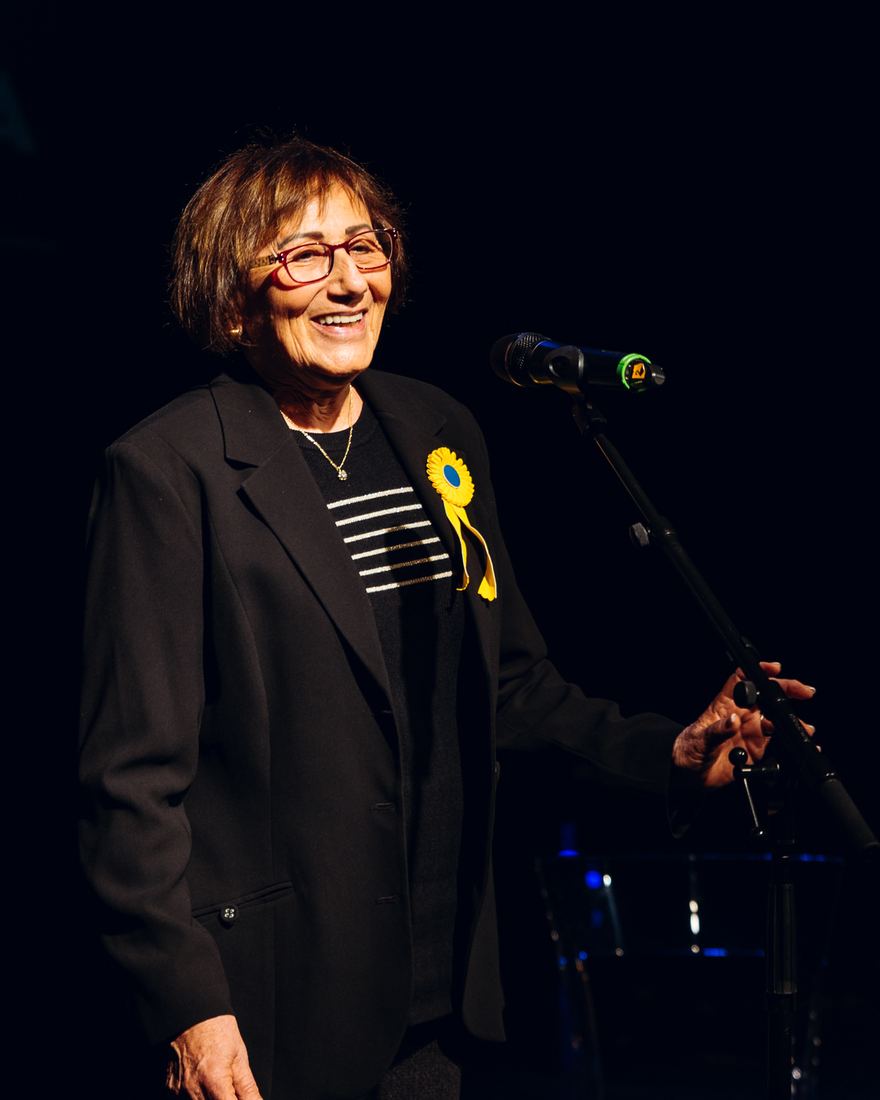
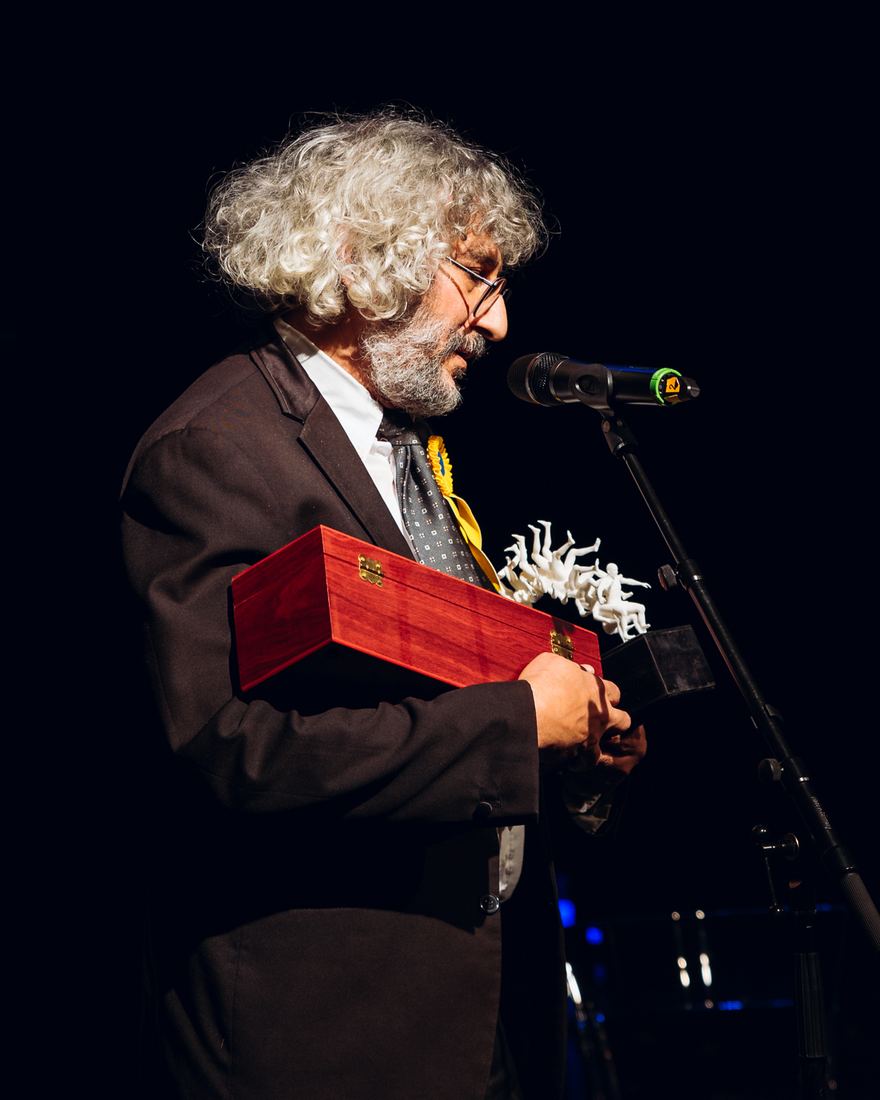
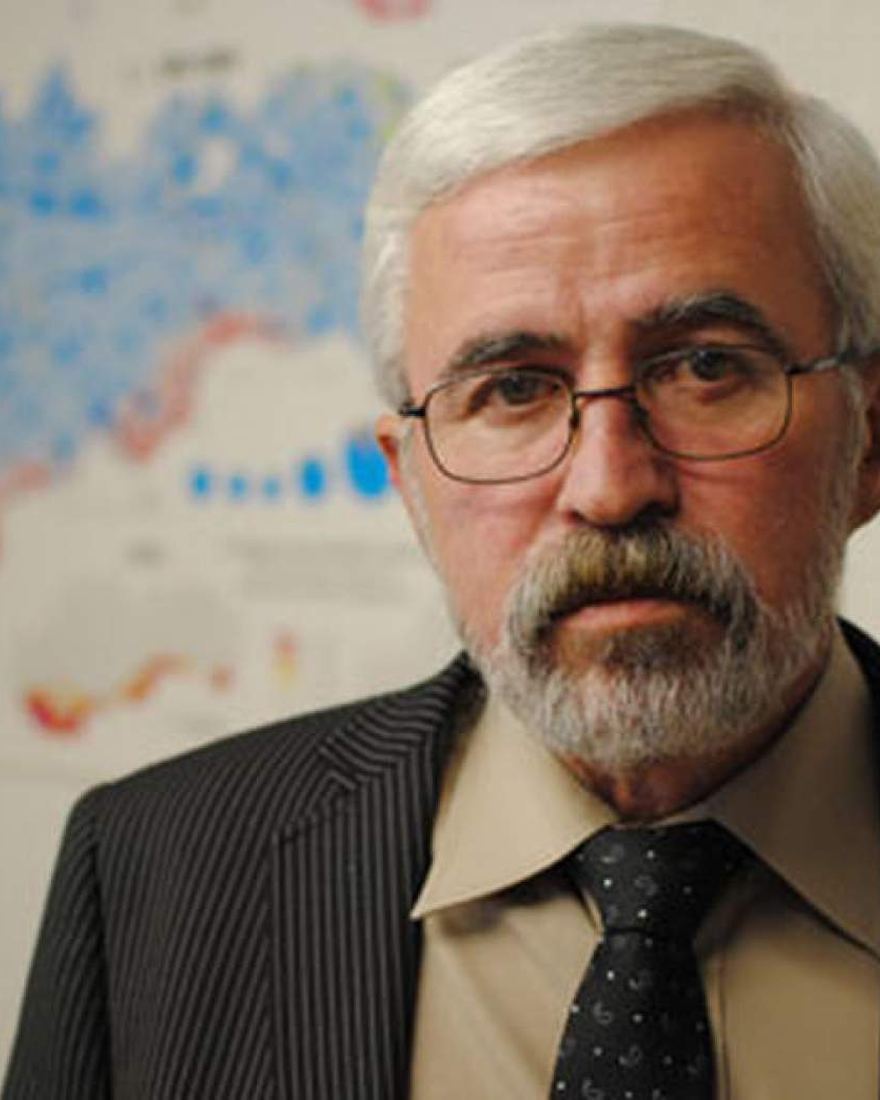
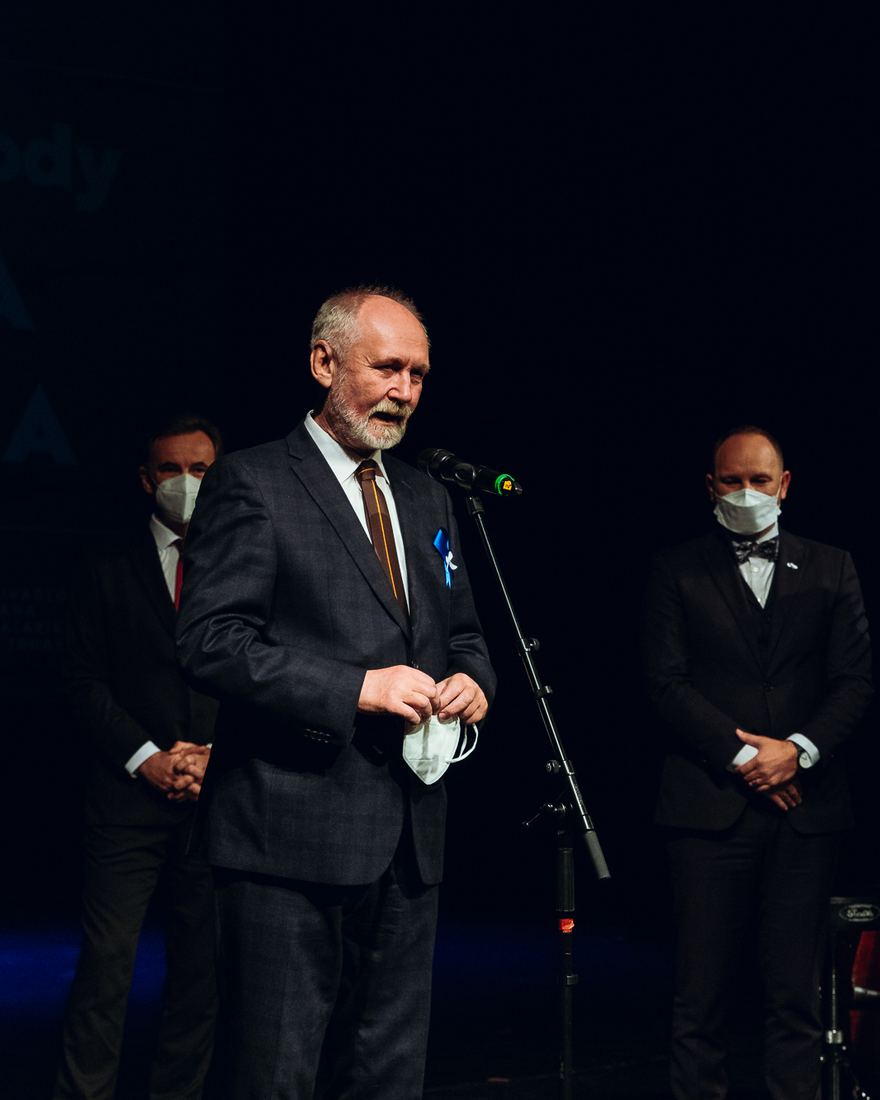
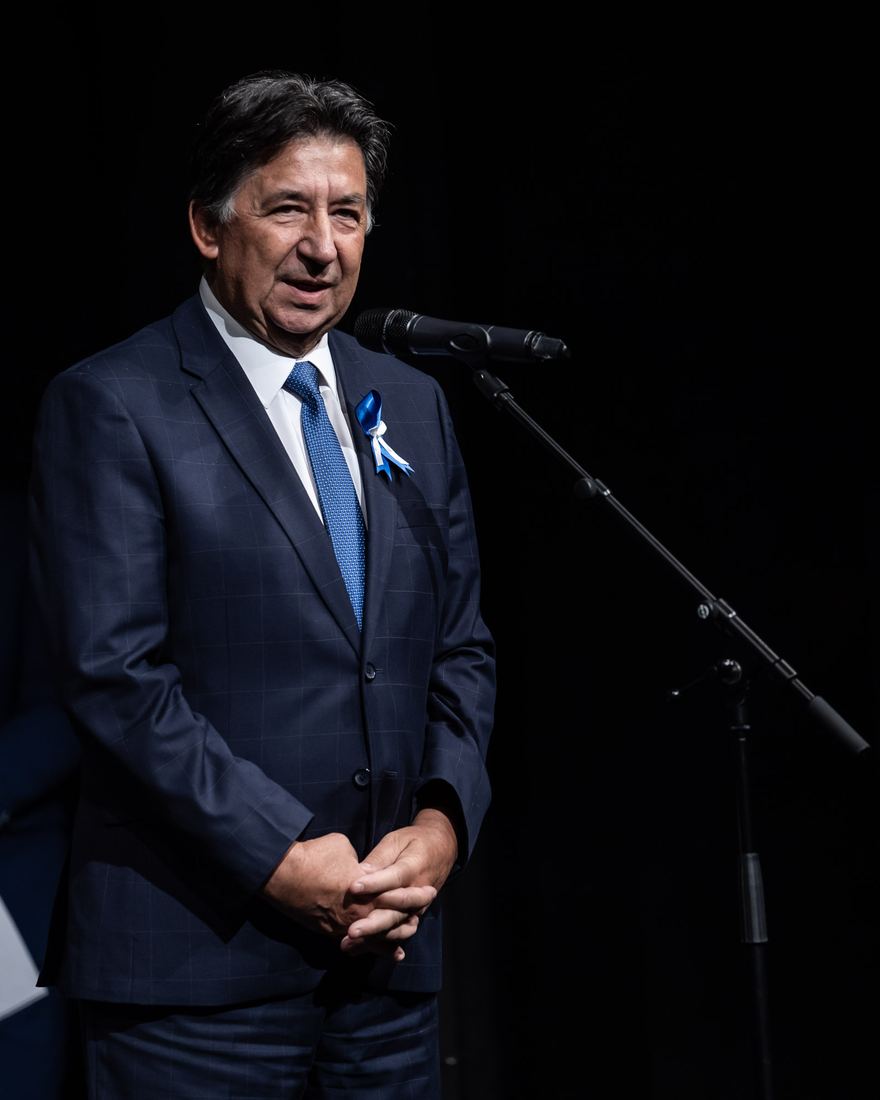
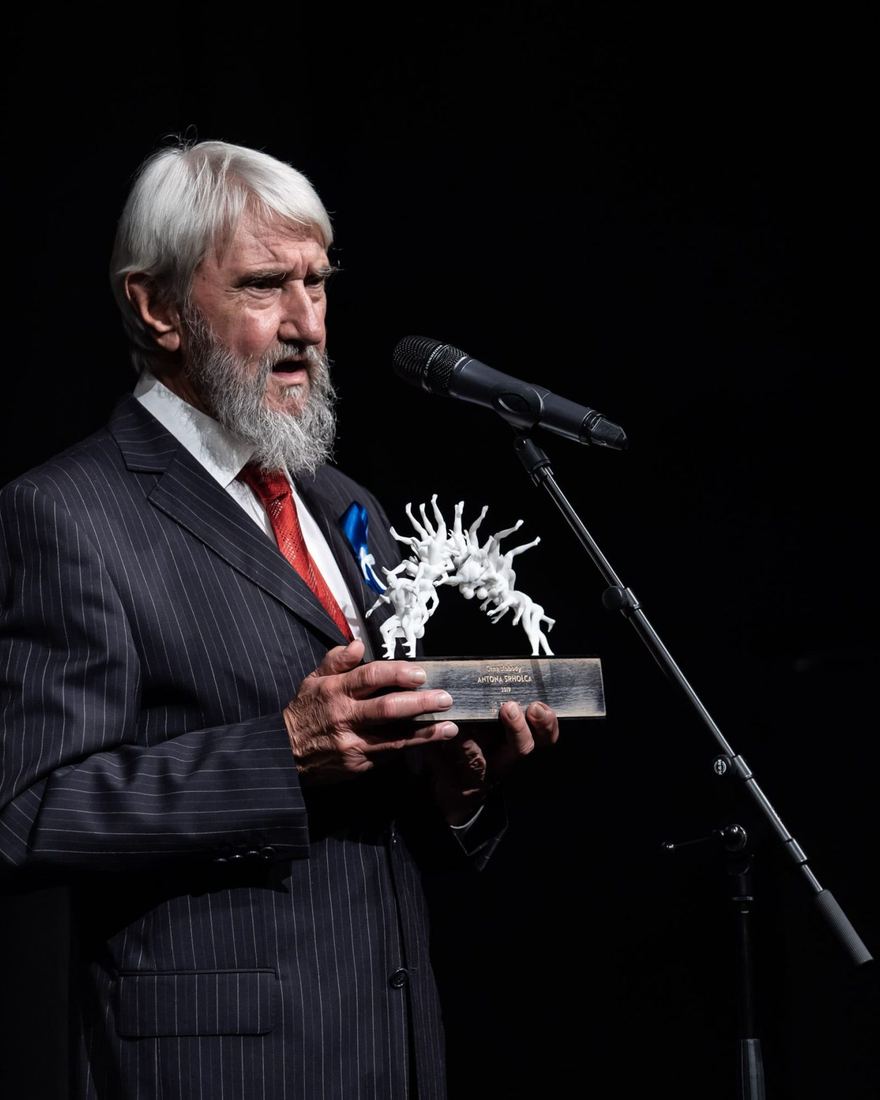
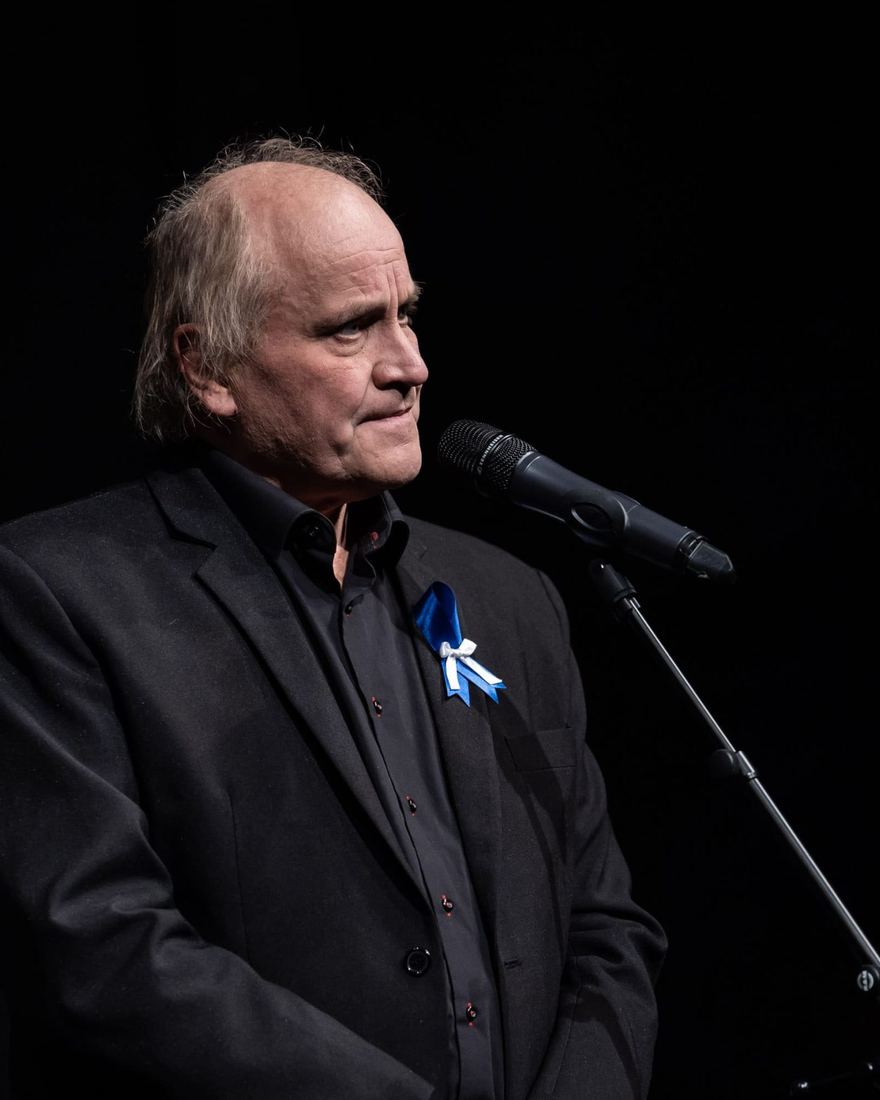
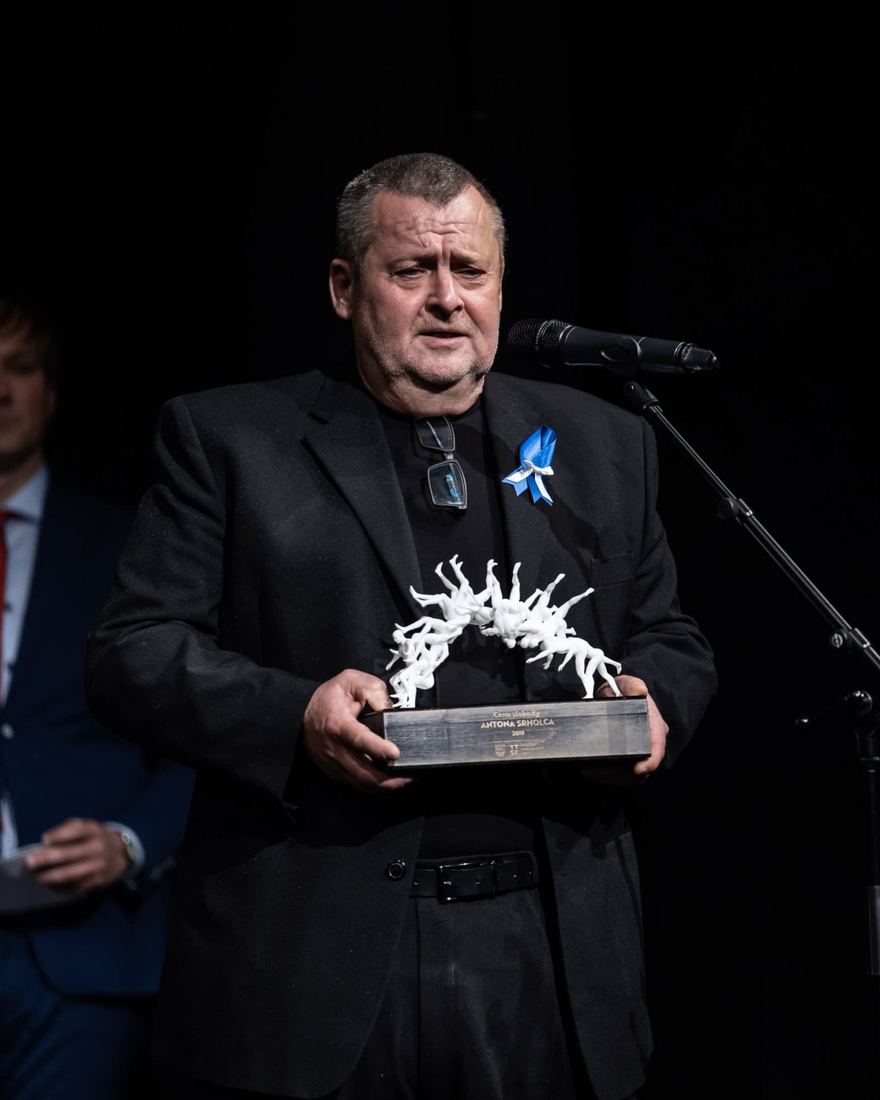
The laureates of the Anton Srholec Freedom Award have shown exceptional courage, resilience in the face of obstacles and the ability to bring positive change to their communities. Their steadfastness and deep devotion to the values of freedom and democracy bring light into the lives of people living in the shadow of violence and oppression.
Martin Bútora is a sociologist, writer, university lecturer and diplomat. He was born on 7 October 1944 in Bratislava, where he also graduated from the Faculty of Arts of Comenius University. In the 1960s he was an editor of the magazines Echo, Reflex and Kultúrny život. After the occupation of Czechoslovakia in 1968 he fell into political disfavour and for years worked as a sociologist and therapist at an alcohol addiction counselling centre.
Jozef Jablonický was a Slovak historian and dissident. He was born on 3 January 1933 in Zavar. He studied history at the Faculty of Arts of Comenius University in Bratislava. From 1960 he worked at the Institute of History of the Slovak Academy of Sciences. In the 1960s he offered an interpretation of the Slovak National Uprising that differed from the one the Communist Party wished to promote. In 1969 he published the book Z ilegality do povstania (From Illegality to Uprising), in which he also documented the non-communist resistance. In doing so, he challenged the Communist Party's efforts to appropriate the Slovak National Uprising.
Father Fidél Ambróz Jurčovič was a Franciscan, theologian, preacher, writer and long-serving provincial. He was born on 17 July 1916 in Vištuk, entered the Franciscan Order in 1931 and was ordained a priest on 23 March 1940 in Rome, where he completed his doctorate in theology three years later. After returning to Slovakia, he taught liturgy and biblical studies in Žilina until the dissolution of the monasteries under Action K in 1950.
Msgr. Károly Lénár was born on 4 April 1923 in the small village of Dolinka in the Ipeľ valley. In 1943 he graduated from the Benedictine Grammar School in Esztergom. He completed his theological studies in Bratislava and Budapest and, although he could have remained there after the Second World War, he decided to return to his homeland, where he was ordained a priest in Bratislava in 1948.
A graduate of the Academy of Fine Arts and Design, he currently works as a university professor at the Faculty of Education of Trnava University in Trnava. For the past thirty years he has devoted himself to political, environmental, activist, participatory and neo-conceptual art. His media range includes painting, actions, performances, events, drawings, objects and printmaking.
Václav Havel was a writer, playwright and politician, one of the most important figures of the resistance against communism, President of the Czechoslovak Socialist Republic and of the Czech and Slovak Federative Republic, and the first President of the Czech Republic.
Timothy Garton Ash, a British historian and commentator, is one of the most prominent figures on the European intellectual scene. In 2005 he was named on the list of the world’s 100 top public intellectuals compiled by the magazines Prospect and Foreign Policy. He was also included in Time magazine’s list of the 100 most influential people in the world.
Poet, literary critic and theorist, literary and cultural organiser. Since 1996 he has been director of the Katedra Foundation and of Katedra, a journal for Hungarian teachers and parents in Slovakia, which is still published today. He is a founding member of the Forum Minority Research Institute. He is the founder and chairman of the Vámbéry Civic Association and the Vámbéry Literary Café. He has edited some twenty anthologies and is the author of collections of poetry and one volume of prose. Gyula Hodossy is the founder of several Hungarian institutions in Slovakia; his name is associated with the Vámbéry conferences, which the Vámbéry Civic Association has been organising in the town of Dunajská Streda for a number of years.
Post Bellum is a civic association that promotes and protects human rights and democracy through activities inspired by so-called European memory. Since 2011 it has been recording in Slovakia the recollections of witnesses to key moments of modern Slovak history. It documents and collects the memories of witnesses to important historical events that have been unjustly forgotten, and passes them on.
František Mikloško was born in Nitra in 1947. While studying at the Faculty of Natural Sciences of Comenius University in Bratislava, he organised various activities and founded Christian student circles. After graduating, he joined the Institute of Technical Cybernetics of the Slovak Academy of Sciences, working in numerical mathematics. In the 1980s he helped organise mass pilgrimages of believers to Levoča, Turzovka, Marianka and Šaštín, which were open acts of defiance against the regime. He did not escape interrogation and surveillance by the State Security (StB) or further persecution. In 1983 he was dismissed from the Slovak Academy of Sciences and worked as a labourer.
Miroslav Cipár was a graphic designer, typographer, illustrator, painter, sculptor and civic activist. He was born in 1935 in the village of Semeteš. He witnessed the Second World War and a tragedy in which Vlasov soldiers shot 21 men in the village. Among them was Miroslav’s father, who, however, survived a gunshot wound through the head. After the communist coup of 1948, the Cipár family’s house and shop were confiscated, as they were deemed enemies of the nation.
František Guldan is a visual artist working in small-format painting, illustration, mosaic, installation, relief, welded sculpture and cultural journalism. He was born in 1953. He graduated from the Faculty of Civil Engineering of the Slovak University of Technology in Bratislava. Under socialism he worked as a designer of building renovations at the Bratislava Construction Company and moved in dissident circles among artists, conservationists, architects, sociologists and heritage preservationists. Since 1978 he has held numerous exhibitions at home and abroad.
Lászlo Nagy was born in 1948. He studied educational psychology and philosophy at Comenius University in Bratislava, where from 1967 to 1970 he chaired the Hungarian Attila József Academic Youth Club. He later worked in sociological research.
Július Bobovnický was born in 1935. He graduated from the Faculty of Medicine of Comenius University in Bratislava and from 1959 worked as a physician at the Hospital and Polyclinic in Skalica. In 1962 he began working in the neurology department, and in 1967 he became its head physician. He held this senior position for 30 years, until his retirement. During his professional career he trained a number of highly qualified neurologists, and under his leadership the originally small inpatient ward was transformed into a modern, high-quality department. Alongside his work at the hospital, he also taught at the Secondary Medical School.
Ladislav (Agnes) Snopko played an important role during the revolutionary period of November 1989 and served as a public official during Slovakia’s democratic transformation. Snopko was born in 1949 in Košice. He studied archaeology at the Faculty of Arts of Comenius University in Bratislava.
Dita Ziss was born in Trnava in 1938, into a period of uncertainty and fear brought by the Second World War. Nevertheless, her family managed to face adversity and keep her out of harm's way. Dita found safety and temporary refuge hidden in an orphanage in Modra and under a false name in Hungary. Life taught her to be brave, but also to be grateful to the good people who helped her in the most difficult moments.
University lecturer (Doc. Mgr., PhD.), political scientist and journalist. He was born in 1957 in Dunajská Streda, where he attended primary school and grammar school. He completed his university studies at Comenius University in Bratislava. After graduating, he intended to become a manual worker so that the communist authorities could not put pressure on him. In the end, however, with the aim of studying various aspects of the life of Hungarians in Slovakia, he took a job at the Hungarian Workers’ Cultural Association in Czechoslovakia (Csemadok). Under the communist regime he became an active member of the civic opposition (the dissent), which established contacts with members of Charter 77 and with the Hungarian opposition. He is the author of several samizdat publications. During the 1989 revolution he co-authored a number of political documents. He was a co-founder of the Hungarian Independent Initiative (later the Hungarian Civic Party), which was established as early as 18 November 1989.
Born in 1979. An ethnologist by training, he has long focused professionally on the Holocaust and the protection of human rights. He is engaged in research, writing scripts for educational films, lecturing and preparing teaching materials for educators.
She was one of the two victims of the uprising of the inhabitants of Borský Sv. Mikuláš against the communist regime in 1949. She was born in 1904. In 1949 the communist regime in Czechoslovakia established the so-called Catholic Action, which was intended to bring priests and citizens together in a kind of pro-regime alternative to the Church. The project met with almost no response. The local dean, Msgr. Augustín Karmaš, likewise rejected it unequivocally and read out in church the bishops' pastoral letter condemning it, the reading of which the authorities had banned. On the day of the solemn ordination of two new priests, a communist agitator came to the village and urged the faithful to join the so-called Catholic Action. Those gathered stood up to him, and he was even physically assaulted.
Writer, journalist and long-time editor at Radio Free Europe. Michal Lošonský was born in 1925 in Malé Brestovany. While still a student at the J. Hollý Grammar School in Trnava, he was involved in the Trnava theatre. He founded the permanent amateur theatre group Nová scéna (New Stage), with which he staged, among other things, the poetry programme Od poroby k slobode (From Bondage to Freedom). He fell out of favour with the communist regime, which targeted students who had supported the Democrats in the 1946 elections, and did not escape investigation by the secret police. In 1946 he went to Prague to study film directing, aesthetics and art history. Constant surveillance and his disagreement with the emerging regime led him to emigrate in June 1949, and he continued his studies at the university in Innsbruck, Austria. Together with other émigrés, he organised a self-help service for victims of Stalinism and helped persecuted people get across the border. From 1953 he worked at Radio Free Europe in Munich, first as a director and then as an editor under the pseudonym Michal Želiar. He is the author of many radio serials and programmes. He wrote poems, reflections and feuilletons for exile periodicals. As an editor, he contributed to the preparation of regular broadcasts. He also wrote film scripts and plays “for the drawer”.
She was born on 7 December 1956 in Bratislava. In 1979 she graduated in sociology from the Faculty of Arts of Comenius University and “signed up” for life to this discipline, which studies society, social phenomena and processes. She began her research career at the Institute of Philosophy and Sociology of the Slovak Academy of Sciences, in the Department of the Sociology of the Family, where she worked as a researcher until November 1989. She obtained her PhD at the Slovak Academy of Sciences for her thesis Typologická metóda v sociálnych vedách (The Typological Method in the Social Sciences, 1986) and a PhD certificate from Oxford University (1990). On the proposal of the Scientific Council of the Faculty of Arts of Comenius University, and on the basis of her work Procesy sociálnej inklúzie a exklúzie (Processes of Social Inclusion and Exclusion), she was appointed professor by the President of the Slovak Republic in 2005.
He was born on 10 February 1952 in Bratislava and is one of the leading figures of the Velvet Revolution. Since 2016 he has been a Member of the National Council of the Slovak Republic for the OĽANO movement.
He was born on 12 August 1938 in Trnava and graduated in dentistry from the Faculty of Medicine of Palacký University in Olomouc. He worked as a dentist and later as director of the hospital in Trnava. Since 1994 he has taught at the Faculty of Health Care and Social Work of Trnava University, first at the Department of Health Care Management and Languages and later at the Department of Public Health.
He was born on 28 July 1954 in Prague into the family of a Protestant pastor and a psychology graduate. His father, Alfréd, was one of the first signatories of Charter 77, as a result of which he was stripped of state permission to practise his profession and was subsequently forced to work as a stoker.
Mgr. Ľubomír Navrátil, editor, journalist, translator, currently head of the Culture Department of the Dúbravka Borough Office, amateur revolutionary, woodcarver and basket weaver
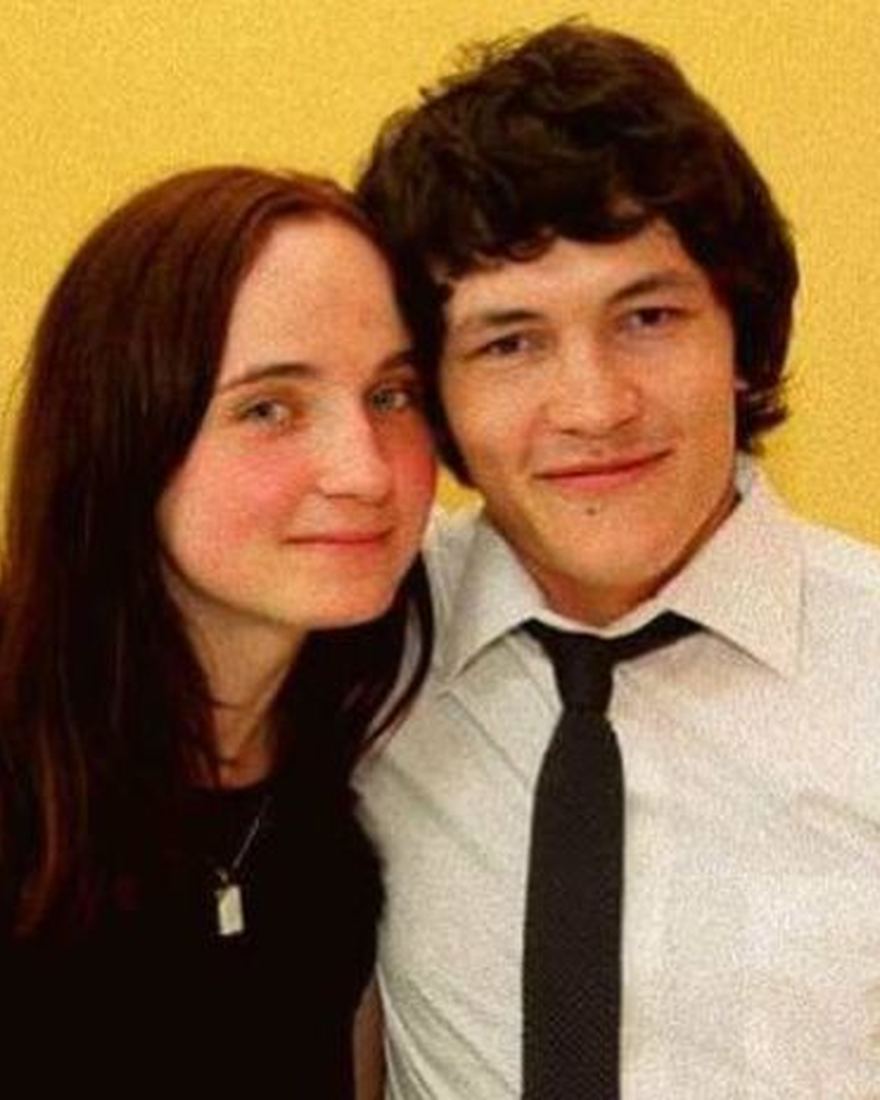
Ján Kuciak was born on 17 May 1990 in Štiavnik in the Bytča District. After earning his master's degree at Constantine the Philosopher University in Nitra, he went on to doctoral studies and subsequently taught mass media communication at the university department. In his professional career he worked for Hospodárske noviny and then for the news portal Aktuality.sk. He devoted himself to investigative journalism, focusing in his articles mainly on abuses of power by top politicians. He wrote about suspicious property transfers, tax fraud and fraud involving EU funds, and uncovered the ownership structures of companies and shell firms linked to public funds, as well as the ties between dubious groups and political elites.
Lajos Grendel was born on 6 April 1948 in Levice. A writer, essayist, journalist and university lecturer, he is one of the best-known and most important representatives of Hungarian literature in Slovakia. He studied Hungarian and English at the Faculty of Arts of Comenius University in Bratislava. Since his debut in 1979 he has published 29 books. His works available in Slovak include Einsteinove zvony (Einstein’s Bells), Cudná správa z vrcholu sna (A Chaste Report from the Summit of a Dream; a selection) and two volumes of the New Hont Trilogy (a paraphrase of the historical name of Hont County, his native region), all translated by Karol Wlachovský. Several of his books have been translated into German, Italian, French and Russian.
She was born on 17 January 1946 in Podkriváň in the Detva District. She has three sons and four grandchildren. As a child she wanted to be a civil engineer, but in the end she was drawn to sociology. After completing her studies she joined the Czechoslovak Research Institute of Labour, which later became a breeding ground for revolutionaries – Fedor Gál, Zorka and Martin Bútora and others worked there. All of them were gradually “let go”. Since under socialism social work was carried out mainly within enterprises, she became head of the psychology and sociology department at the Heavy Engineering Works. During November 1989 she was active in Public Against Violence.
Born on 15 October 1927, he was a political prisoner convicted in a fabricated political trial in the 1950s. His father and mother were convicted along with him. He is an active member of the Confederation of Political Prisoners of Slovakia, whose honorary chairman was A. Srholec.
Milan Kňažko, actor, politician and one of the most prominent figures of the events of November ’89, was born on 28 August 1945 in Horné Plachtince. After attending a secondary school of civil engineering, he was admitted to the Theatre Faculty of the Academy of Performing Arts. He graduated in 1968 under the guidance of Professors A. Bagar and M. Huba. He then completed postgraduate studies at the University of Nancy in France.