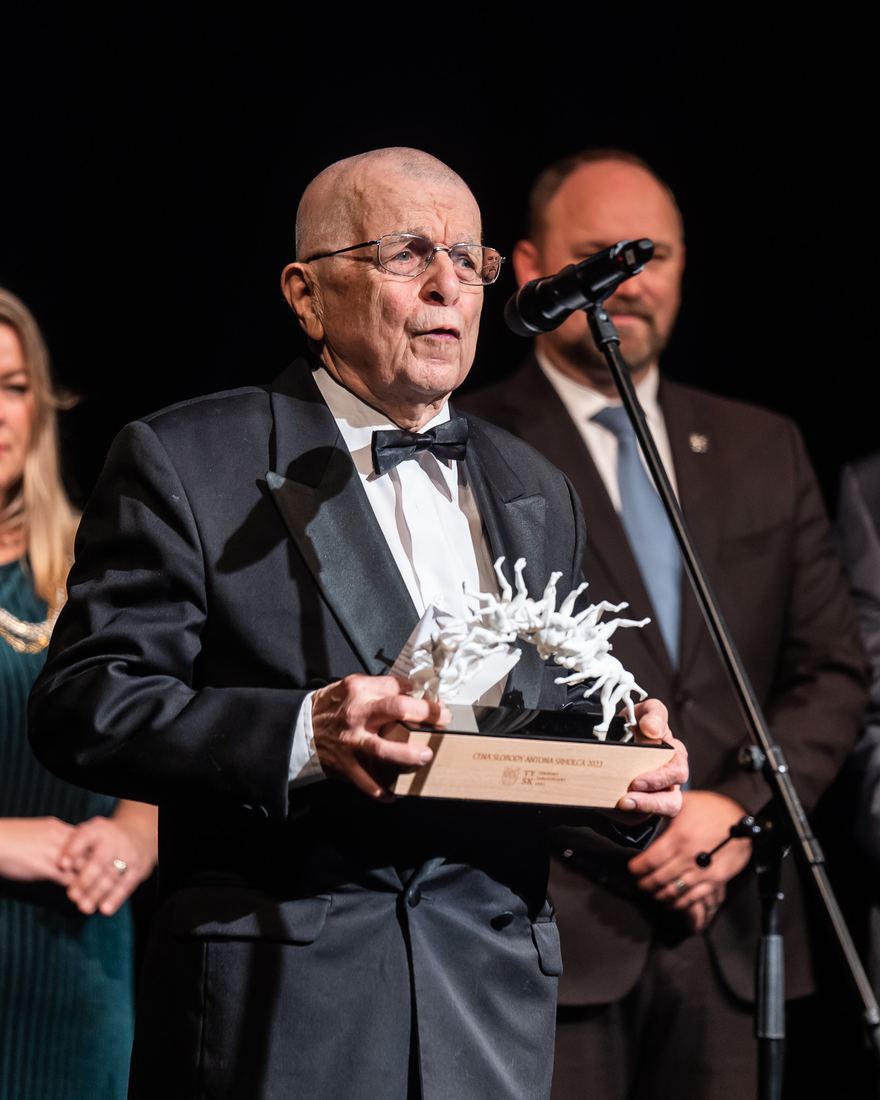
László Nagy
Laureate of the 2023 edition
Lászlo Nagy was born in 1948. He studied educational psychology and philosophy at Comenius University in Bratislava, where from 1967 to 1970 he chaired the Hungarian Attila József Academic Youth Club. He later worked in sociological research.
Laureate profile
Lászlo Nagy was born in 1948. He studied educational psychology and philosophy at Comenius University in Bratislava, where from 1967 to 1970 he chaired the Hungarian Attila József Academic Youth Club. He later worked in sociological research.
Under the communist regime he belonged to a group of intellectuals and writers from Dunajská Streda who in 1970 founded the Committee for the Protection of the Rights of the Hungarian Minority in Czechoslovakia. On the occasion of the 70th anniversary of the founding of Czechoslovakia, they issued the Memorandum of Hungarians in Slovakia, which pointed out the relevant problems of the Hungarian minority but also drew attention to human rights violations in Czechoslovakia. An important aspect of the memorandum was that it went beyond the previously exclusive focus on the rights of the Hungarian minority. Its authors recognised the importance of fighting for the protection of universal human rights, for where the rights of the majority are violated, the rights of minorities will inevitably be violated as well.
This activity led in 1989 to the founding of the Hungarian Independent Initiative. Lászlo Nagy was the first signatory of its programme declaration of 18 November 1989 and from 1990 he was also its chairman. From 1990 to 2012 he was a Member of the National Council of the Slovak Republic, and in 2004 a Member of the European Parliament. For three parliamentary terms (1998–2009) he chaired the Human Rights Committee of the National Council of the Slovak Republic. He later served as Government Plenipotentiary for National Minorities. He organised expert lectures on human and minority rights at international and domestic forums. He actively cooperated with the Cuban and Belarusian opposition and with Slovak human rights and minority civic associations.