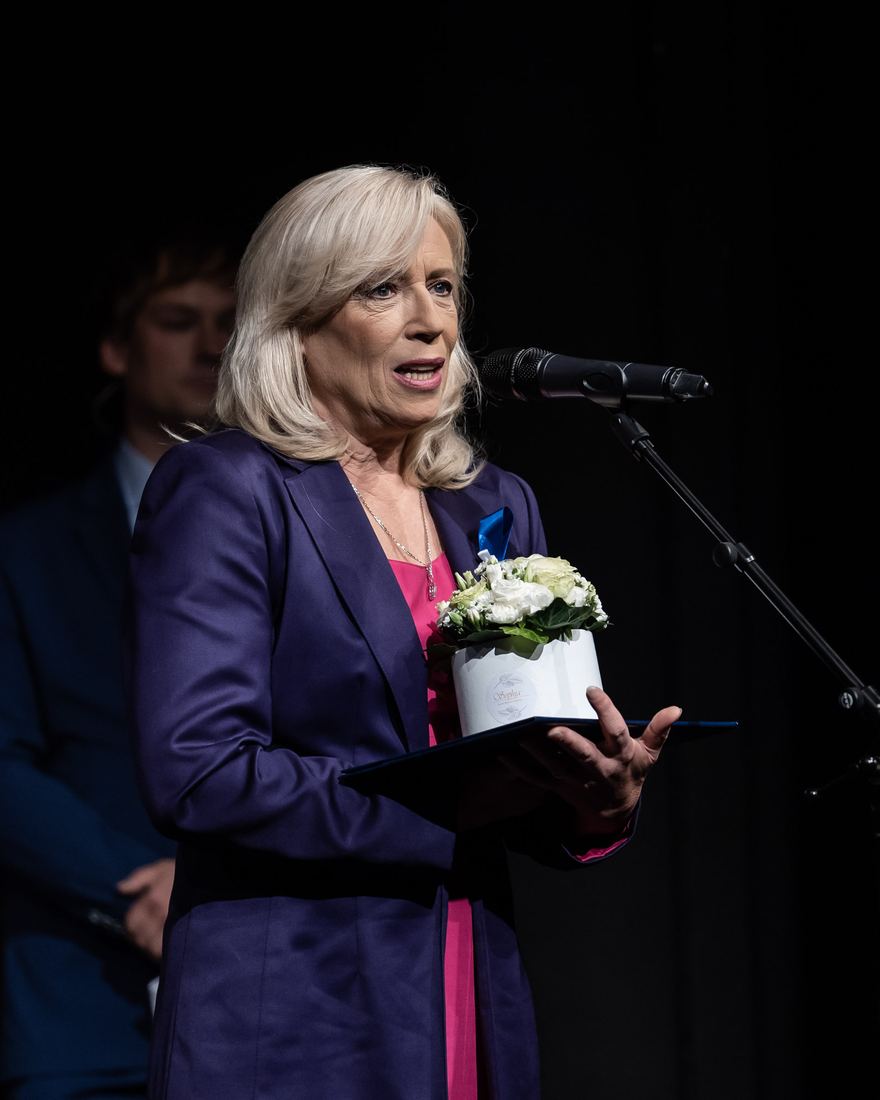
Iveta Radičová
Laureate of the 2019 edition
She was born on 7 December 1956 in Bratislava. In 1979 she graduated in sociology from the Faculty of Arts of Comenius University and “signed up” for life to this discipline, which studies society, social phenomena and processes. She began her research career at the Institute of Philosophy and Sociology of the Slovak Academy of Sciences, in the Department of the Sociology of the Family, where she worked as a researcher until November 1989. She obtained her PhD at the Slovak Academy of Sciences for her thesis Typologická metóda v sociálnych vedách (The Typological Method in the Social Sciences, 1986) and a PhD certificate from Oxford University (1990). On the proposal of the Scientific Council of the Faculty of Arts of Comenius University, and on the basis of her work Procesy sociálnej inklúzie a exklúzie (Processes of Social Inclusion and Exclusion), she was appointed professor by the President of the Slovak Republic in 2005.
Laureate profile
She was born on 7 December 1956 in Bratislava. In 1979 she graduated in sociology from the Faculty of Arts of Comenius University and “signed up” for life to this discipline, which studies society, social phenomena and processes. She began her research career at the Institute of Philosophy and Sociology of the Slovak Academy of Sciences, in the Department of the Sociology of the Family, where she worked as a researcher until November 1989. She obtained her PhD at the Slovak Academy of Sciences for her thesis Typologická metóda v sociálnych vedách (The Typological Method in the Social Sciences, 1986) and a PhD certificate from Oxford University (1990). On the proposal of the Scientific Council of the Faculty of Arts of Comenius University, and on the basis of her work Procesy sociálnej inklúzie a exklúzie (Processes of Social Inclusion and Exclusion), she was appointed professor by the President of the Slovak Republic in 2005.
Alongside her academic career, Professor Iveta Radičová displayed courageous civic engagement and stances already under the communist regime, at the risk of at least losing her future professional prospects. She worked with the people who in 1987 published the samizdat Bratislava nahlas (Bratislava Aloud), and in early autumn 1989 (before the Velvet Revolution) she co-initiated a letter from Slovak sociologists to the then President Gustáv Husák. In it, together with 14 colleagues, she called for the government to resign and for a change of regime, and above all protested against the imprisonment of the dissidents known as the Bratislava Five (Miroslav Kusý, Ján Čarnogurský, Hana Ponická, Anton Selecký and Vladimír Maňák).
As a result of her political activities, she was dismissed from her job. In November ’89 she became fully involved in public affairs, and between 1990 and 1992 she was a member of the Public Against Violence (VPN) movement, briefly also serving as its spokesperson.
In 1992 she founded the think tank Centre for Social Policy Analysis – S.P.A.C.E., and from 1993 to 1997 she also served as deputy director of the Academia Istropolitana.
In 2005 she became Minister of Labour, Social Affairs and Family, and from 2010 to 2012 she assumed constitutional responsibility as Prime Minister of the Slovak Republic, becoming the first woman in history to hold this office since the establishment of the independent Slovak Republic. Although she took over the government in an exceptionally difficult period marked by the adverse effects of the economic crisis, her tenure as Prime Minister was characterised by continuity with the ethos of November 1989, a clearly pro-European and pro-Atlantic anchoring in foreign policy, and, in domestic policy, a commitment to the principles of open government, the strengthening of civil society, efforts to find consensual, practical solutions to problems, and a high bar of personal moral integrity.
Since November 2012 she has worked at the Faculty of Mass Media of the Pan-European University, and since September 2015 she has also taught at the Bratislava International School of Liberal Arts. Her academic interests are social policy and EU policy.